6 minute read · Preparation and surface problems
Paint walls by starting with a sound, prepared background, applying the specified system consistently across complete surfaces, allowing the correct recoat conditions and inspecting the dried result. Cutting in, rolling and handback are connected stages. Another coat is useful only when it addresses the actual remaining issue.
This workflow covers ordinary existing interior walls. New plaster, wallpaper residues, damp and failed paint need their own preparation decisions first. For a Dundalk room, describe those conditions before treating the job as a straightforward colour refresh.
Check the surface is ready
Confirm that the wall is sound, clean and appropriately dry for the chosen coating. Repairs should be ready, contamination addressed and any specified primer completed. Look for loose material, dusty corners, visible ridges and unresolved stains before opening the finish coat.
Read the product label and technical sheet together. Identify the permitted substrate, tools, thinning, coverage, conditions and normal coating system. Do not transfer instructions from a similar-looking range or another country's formulation.
Prepare the room as agreed: clear or arrange furniture, protect adjacent surfaces and maintain safe access. Choose suitable tools and access for the work. Do not use furniture as an improvised platform to reach high areas.
Confirm colour before application. Check the product, base, shade and finish against the order. Stir according to instructions and manage multiple tins as the manufacturer advises. A colour name alone does not identify the complete coating.
| Before application | Check | If unresolved |
|---|---|---|
| Background | Sound, clean and ready? | Return to preparation. |
| Repairs | Ready and evenly finished? | Assess material and treatment. |
| Coating | Correct product, colour and finish? | Clarify before opening the room's scope. |
| Conditions | Within specification? | Adjust programme or obtain advice. |
| Access | Suitable and unobstructed? | Resolve working arrangements. |
Cut in and roll a consistent coat
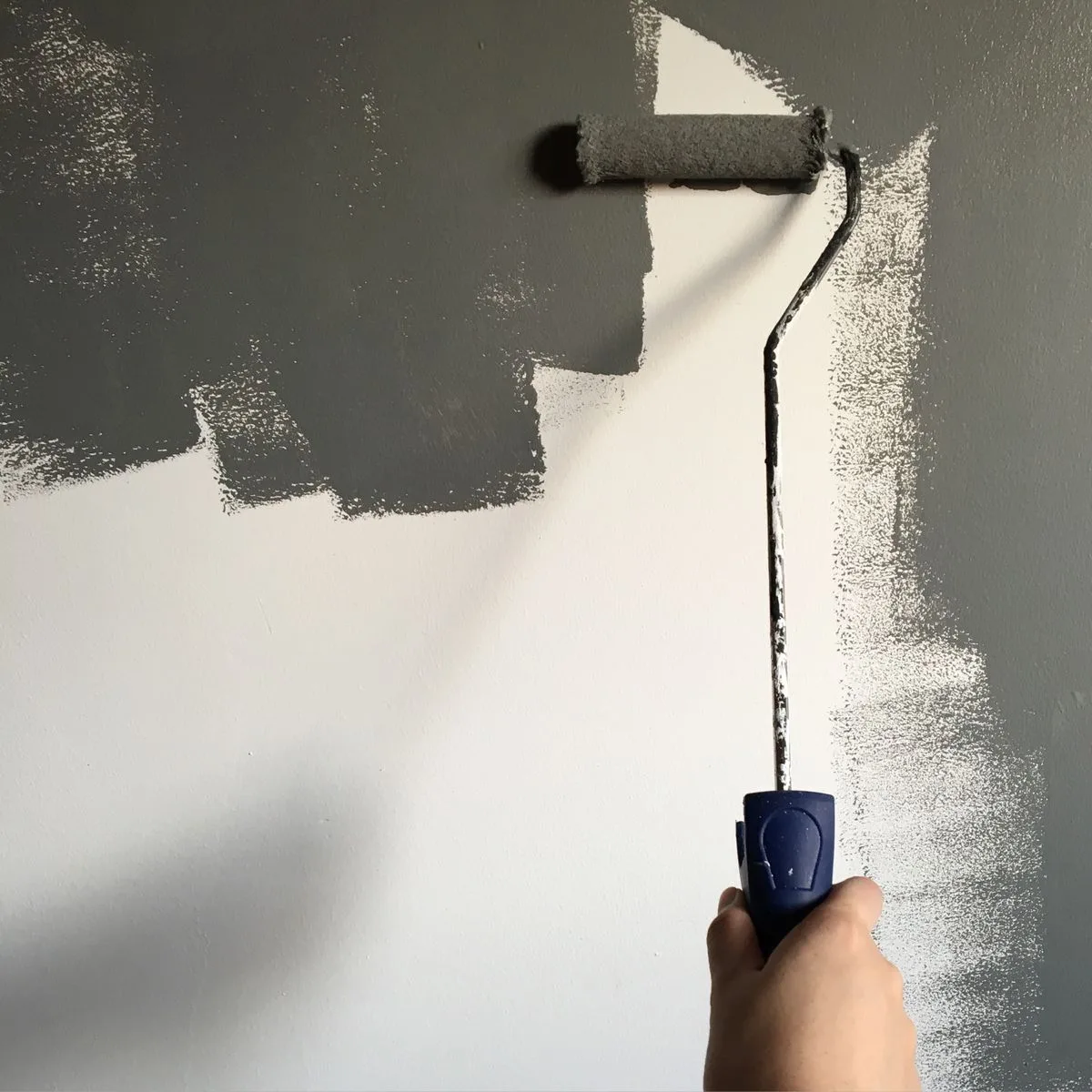
Cutting in means using a brush where a roller cannot reach neatly, such as corners and junctions. Rolling covers the main wall area. The two methods need to form a consistent coat rather than a thick brushed frame around a differently textured centre.
The Dulux Trade Advanced Contract Matt sheet gives a specific approach: cut in one wall at a time and roll immediately afterwards to reduce framing and patchiness. It also requires consistency if the product is thinned for the relevant use. That instruction is tied to this product, rather than a universal technique for all decorative finishes.
Use the roller type recommended for the coating and surface. Load and distribute paint consistently, avoiding a nearly dry roller forced across a large area or heavy wet ridges left by an overloaded one. Follow the product's working method rather than treating a W pattern as the objective itself.
Plan a complete wall before stopping where practical. Open corners or natural breaks can provide clearer boundaries than a pause midway across a visible surface. Do not keep brushing or rolling partially drying paint in an attempt to make it look smooth.
Follow coverage and recoat instructions
Coverage is a guide to applying the coating appropriately, not a target to exceed by stretching every litre. Excessively thin application can leave weak coverage; heavy application can introduce drying and texture problems. Follow the stated system and assess the dried result.
Respect recoat requirements under the actual conditions. Touch dry is not automatically recoatable, and a normal interval may change when temperature or humidity differs. Keep other dusty work out of the room during the relevant stages.
Colour contrast may require additional work within the selected system. Do not promise an identical coat count for pale-on-pale and dark-to-light changes. Equally, avoid adding coats without diagnosing a texture, absorption or adhesion issue.
Inspect and hand back the room
Inspect after the coating has reached the relevant drying stage, using ordinary daylight and room lighting. Look across complete walls and along junctions. Wet paint can mislead, so do not make final decisions solely while it is being applied.
Check the agreed scope: complete surfaces, edges, openings and any included details. Record anything needing attention and distinguish it from defects outside the original scope. Avoid treating a new light source or later trade damage as proof of the same issue.
Handback should clarify the selected coatings and aftercare. Ask about furniture clearance, adhesive hooks, cleaning and any freshly coated doors. A wall ready for careful use may still need protection from rubbing or pressure.
Roller marks, patchiness and when another coat is not the answer
Describe what you see before deciding on the remedy. Uniform old colour showing through differs from raised roller ridges, shiny overlaps, repair patches or lifting film. Those observations point to different questions.
| Dried appearance | Question | Next decision |
|---|---|---|
| Even background colour remains | Coverage system complete? | Assess further specified application. |
| Visible raised bands | Application texture or ridges? | Assess finish before coating over texture. |
| Different repair patches | Absorption or surface texture? | Review preparation. |
| Framed edges | Brush/roller consistency and timing? | Review application method. |
| Lifting or blisters | Adhesion or moisture issue? | Stop and assess the cause. |
Hypothetical example: a pale wall shows both the former colour faintly and a raised repair ridge. Another appropriate coat may improve opacity, but it will not flatten the ridge. Decide on the physical defect before continuing the colour system.
View the finish as the room is used
Inspect from ordinary positions and with the room's normal lighting as well as useful side light. Note whether an issue is a physical ridge, colour coverage or a reflection difference. A photograph taken inches from a wall can document a detail without representing the whole-room appearance.
Keep the observations specific when discussing attention needed. “Raised band beside the repaired chase” is more useful than “the paint is wrong” and points the assessment toward the relevant stage.
Questions about painting walls
Should I cut in the whole room first?
Follow the chosen product's working method. For the named Dulux example, the instruction is to cut in one wall and roll it immediately to maintain consistency. Letting every edge dry first can create a different finish at the perimeter with some systems.
Should I push harder when the roller runs dry?
Do not use extra pressure as a substitute for consistent loading and specified application. It can produce uneven texture or coverage. Use the appropriate sleeve and maintain a workable film according to the product's instructions. A nearly dry roller is not a method of extending the coverage rate.
Will one more coat remove every patch?
No. Identify whether the patch is colour coverage, texture, uneven absorption or a failing background. Another finish coat may address opacity but leave ridges or adhesion problems unchanged. Inspect the dried wall and resolve the relevant preparation or application issue before continuing.
Continue with Preparing walls for painting, Paint drying time versus curing time, Washable matt or eggshell for walls?. Our interior painting service in Dundalk explains the work you can enquire about.
Interior painting: discuss your surfaces and scope. Contact the team with your area and photographs.