
6 minute read · Colour and room decisions
Clean painted walls only when the coating is ready for cleaning, using its recommended method and an inconspicuous test first. Start gently and stop if colour transfers, the film softens or the sheen changes. A stubborn scuff may need a paint repair rather than harder scrubbing.
For a home in Dundalk, first find the paint record if you have it. Brand, product, finish and application date are more useful than knowing the wall is white or matt. They help you decide whether to clean, touch up or repaint a complete surface.
Wait for the specified cure
Touch dry, ready to recoat and ready for washing are different stages. A surface can feel dry while still developing its final resistance. Use the actual manufacturer's care and curing information rather than a universal number of days.
If you do not know what was applied, do not assume the wall can tolerate vigorous cleaning because it was painted recently. Ask the person who supplied or applied the coating if possible. An unknown finish calls for a cautious test, not a stronger cleaning mixture.
Read drying versus curing paint for the distinction. Room conditions can affect drying and development of the film, so a date on the calendar is not the whole assessment. Keep ventilation and normal product instructions in mind without applying heat aggressively to rush the process.
Test a gentle compatible cleaning method
First identify whether you are dealing with loose dust, a surface mark, grease, a chip or an underlying stain. Cleaning removes material on the surface; it does not repair missing paint or resolve a leak behind a water mark. Repeated damp or mould requires separate assessment.
Sherwin-Williams recommends mild cleaning and cautions against harsh chemicals or abrasive scrubbing. Its guidance includes testing before washing. The actual coating's instructions take precedence, particularly for products with specific cleaning restrictions.
Use a soft material and avoid saturating the wall. Work gently on a small inconspicuous area, then let it dry before judging. If the sheen or colour changes, stop. Do not keep rubbing because the wet patch appears temporarily better. Avoid mixing cleaners or escalating to solvents without explicit product guidance.
| What you see | Useful first decision | When to stop |
|---|---|---|
| Loose dust | Try a gentle dry method suitable for the finish | If the coating rubs off or flakes. |
| Ordinary surface mark | Test the specified gentle cleaner | If colour transfers or sheen changes. |
| Chip exposing substrate | Consider repair rather than cleaning | Scrubbing cannot replace missing coating. |
| Persistent stain | Identify its nature and cause | Do not conceal unresolved moisture. |
| Shiny patch after rubbing | Assess possible finish damage | More rubbing may enlarge it. |
Understand visible touch-up differences
A touch-up can show even when the colour name is correct. The original coating may have aged, the new paint may be a different batch or formulation, and application texture can differ. Sheen also changes how a patch catches side light.
Retained paint is useful only if it is still suitable to use and can be prepared according to its instructions. A crusted, contaminated or poorly stored remainder should not be treated as a reliable match. Keep the label and product record even if the leftover paint is unusable.
Test a small repair where appropriate and assess it dry under normal lighting. Do not promise an invisible result. A full wall or clearly bounded panel field may provide a more consistent appearance where a local patch remains obvious.
A clean, touch-up or repaint decision tree
If the coating is sound and the mark is ordinary surface dirt, follow the product's compatible cleaning method. If the test changes the coating, stop and assess the finish rather than repeating the method across the wall.
If a small chip or local damage remains, establish whether a compatible repair and touch-up is practical. Compare the test after drying. If the patch is clearly visible, decide whether that is acceptable in its location or whether a complete bounded surface should be repainted.
If the problem is widespread wear, repeated failed patches or an unstable coating, plan the preparation and repaint scope. If it is recurring damp, mould or a water stain, establish the cause first. The decision is based on the underlying condition, not on how much cleaning effort has already been spent.
A hypothetical hallway example
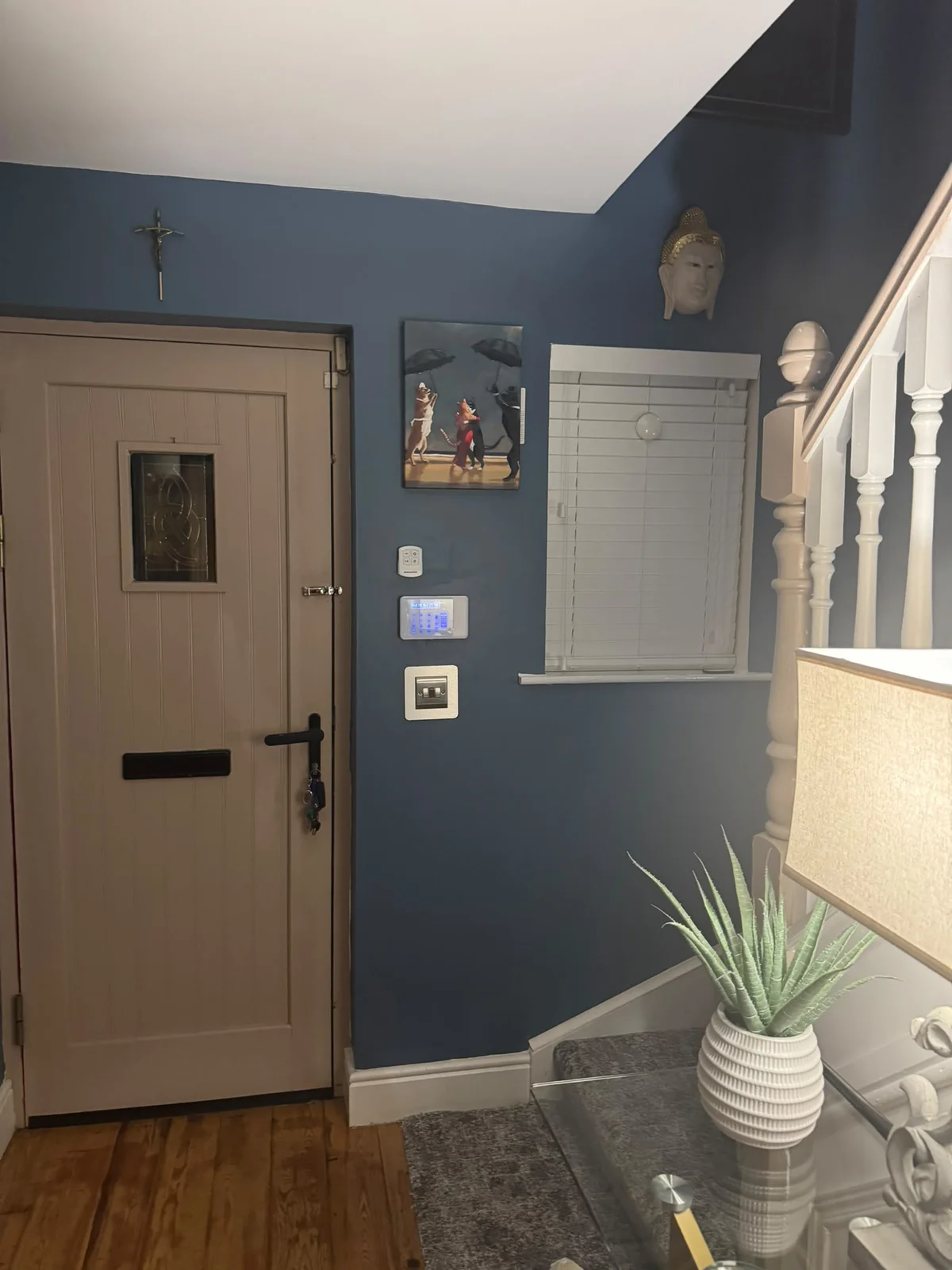
A hallway has hand marks near a switch, a chipped corner and a shiny patch left by earlier rubbing. The hand marks may respond to a permitted gentle cleaning test. The chipped corner needs material repair and coating assessment. The shiny patch may remain visible even after the dirt is gone.
Treating all three as dirt could enlarge the damaged area. Treating all three as a full repaint immediately may be unnecessary. Record the separate conditions, try only the appropriate low-impact test and decide the repaint extent from the dry result.
If a touch-up is attempted, note product, colour and application method. This record helps explain later differences. It does not guarantee that another small patch will blend into the aged surrounding wall.
Keep the actual coating care instructions
Store the product name, colour reference, finish, date and care instructions together. If walls and trim look similar but use different systems, keep both records. A cleaner suitable for one is not automatically suitable for the other.
For future repainting, describe the wear pattern and preferred appearance. A more suitable cleaning specification may be useful, but no paint makes walls immune to rubbing, knocks or every stain. Repeated chair contact or a furniture edge may need a practical arrangement change too.
Read preparing walls for painting before planning a new finish. For interior painting in Dundalk and nearby areas, send photographs and the surface list. Photos begin the discussion, and a visit may be needed to assess condition.
Questions before you decide
Should I use an abrasive cleaning sponge on a stubborn mark?
Do not assume it is compatible with the finish. Abrasive action can change sheen or remove coating even when the dirt appears to improve. Check the actual paint care instructions and test discreetly before any permitted method. If a mark resists gentle compatible cleaning, consider whether it is damage or a stain needing another approach. More force can enlarge a visible patch and make later touch-up harder to blend.
Can fresh paint touch up a wall painted several years ago?
It may be possible, but matching the original colour name does not guarantee an invisible repair. Ageing, batches, formulation, texture and sheen can all affect the comparison. Use the correct product information and judge an appropriate test once dry. If a patch remains conspicuous, decide whether it is acceptable there or whether repainting a complete bounded surface would give a more consistent result.
Is it worth keeping leftover paint for maintenance?
Keep usable paint only according to its storage instructions, with the full label and application record. The information remains useful even if the contents later become unsuitable. Do not use contaminated or poorly stored paint simply because it is the original colour. Before a touch-up, check condition and compatibility, and remember that retained paint still cannot guarantee a match with an aged or repeatedly cleaned surrounding surface.
Interior painting: discuss your surfaces and scope. Contact the team with your area and photographs.