
6 minute read · Preparation and surface problems
To paint a dark wall a lighter colour, first confirm that the existing finish is sound, then select a compatible system with suitable opacity. Test the new shade and assess each dried coat. A fixed promise of two coats, or a rule that every dark wall needs white primer, is not reliable for every product and colour.
For a room in Dundalk or nearby, show the current colour and finish in ordinary light. Say whether it is a single feature wall or the whole room. A colour change is a coverage task, but existing peeling, stains or gloss can introduce separate preparation decisions.
Assess the existing dark finish
Look beyond colour. Record sheen, condition, cleaning history and bare repairs. A sound matt finish presents different questions from a shiny wall with polish residues or paint that lifts at its edges. Do not assume darkness is the reason for every defect.
Identify marks that may bleed through separately from the old colour showing through. Weak opacity and stain migration are different problems. Adding ordinary finish coats to a stain without a suitable system may not resolve it.
Assess any unknown older coatings before sanding or stripping. A light-colour project is not permission to disturb hazardous material. Where the background is sound, there may be no reason to remove it simply because the colour is strong.
Show repaired patches as well as the general wall. Bare areas can absorb differently from surrounding paint and may need appropriate local preparation. An uneven background can remain visible after the old dark colour is covered.
Opacity, colour change and samples
Opacity describes how effectively the coating obscures the background at its specified application. It is not identical for every range, base and shade. Do not judge it from wet paint or compensate by applying an excessively thick coat.
The Dulux Trade Advanced Contract Matt sheet explicitly notes that significant colour changes may require additional coats. That qualification belongs alongside its normal system description, rather than being ignored when a dark wall is changed to a light finish.
Sample the intended new colour in the room, alongside fixed flooring, furniture and trim. A sample's purpose is to test appearance; it does not establish the final system's coverage if it is a different product or applied differently.
Compare the light colour on a suitably prepared test area after drying. View it in daylight and under the room's lamps. A shade that looks good on a bright sample card can look different over a large wall beside existing woodwork.
| What you see | Likely question | Better response than guessing |
|---|---|---|
| Old colour visible evenly | Opacity or incomplete system? | Assess dried coats against the specification. |
| Distinct brown or coloured mark | Stain rather than simple background colour? | Identify the mark and compatible treatment. |
| Patches at repairs | Absorption or texture variation? | Review preparation before more finish coats. |
| Ridges or shiny bands | Application or thickness variation? | Assess the finish and product technique. |
| Lifting edges | Adhesion failure? | Stop and assess the background. |
Preparation and product choice
Choose the system for the material and existing coating. Clean contamination appropriately, deal with defects and confirm whether a primer or undercoat has a defined role. A dark wall does not automatically require a separate stain blocker.
If a manufacturer recommends a base or first-coat colour, follow that recommendation for the selected finish. Do not tint a primer freely or use a different product's shade advice. Colour, base and system need to be considered together.
Calculate material quantities using actual surface area and product coverage. A major colour change may alter the quantity needed, but it does not justify guessing an arbitrary extra percentage for every room. Confirm the system, then estimate materials.
Maintain consistent application across complete walls. Brush and roller areas can look different if product thickness or working method varies. Follow the chosen product's technique, including any instructions about keeping edges wet.
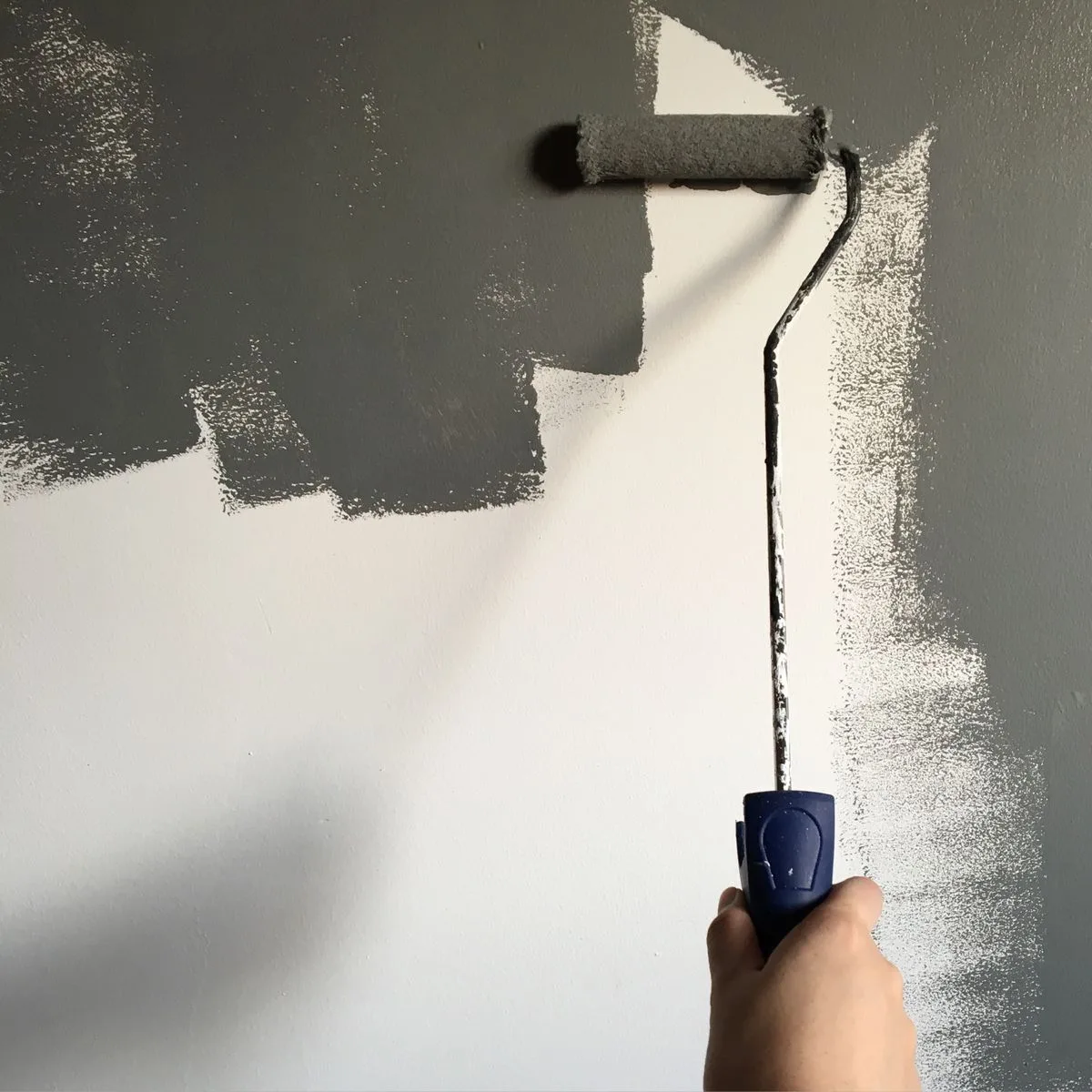
Why a fixed coat count is not universal
A stated normal system is a starting specification, not a guarantee that every colour contrast disappears at exactly the same point. The existing colour, new shade, range, background and application all matter.
Hypothetical example: a navy feature wall and three pale walls will all become the same off-white. The navy wall needs its own coverage assessment, while a filled area on a pale wall needs attention to absorption. The goal is a consistent dried finish across complete surfaces, not identical treatment regardless of condition.
- Assess soundness and identify marks.
- Choose the exact finish and suitable preparation system.
- Test colour beside fixed room finishes.
- Estimate materials from area and specified coverage.
- Apply according to the product system.
- Assess the dried result before deciding what remains.
Record what the sample actually tells you
Write the sample's colour, product and finish beside your notes. If the tester differs from the final range, record that limitation. It can still help choose a shade, but it should not be used to promise the final product's opacity, cleaning performance or coat count.
Look at the wall in normal use, including the evening lighting and adjoining rooms. Do not assess only a close-up photograph that crops out the floor and door frames. A light shade is a relationship with the room, not a colour-card decision in isolation.
When comparing two proposed systems, separate material coverage from labour and preparation. A higher-coverage finish may still need a defined preparation stage; a cheap intermediate coat may add work without solving a relevant problem. Ask what each layer contributes to the selected system before adding it to the scope.
Questions about changing a dark wall
Should I paint it white first?
Only if that is a suitable part of the selected system. An extra white coat is not automatically an adhesion primer or stain blocker. Confirm the manufacturer advice for the final colour and background rather than buying a cheap white coating as a universal intermediate layer.
Must the old dark colour be sanded off?
No, darkness alone does not justify removal. The relevant issues are the existing coating's soundness, compatibility and preparation needs. Unknown older coatings require assessment before disturbance. A sound compatible background may be retained under the chosen system, subject to its instructions.
Why can I still see the old colour through wet paint?
Do not judge final coverage while the coat is wet or keep working it to force opacity. Let it dry as specified, then assess the appearance and the next required stage. If there are ridges, peeling or patchy repairs, investigate those issues separately from simple colour coverage.
Continue with Choosing paint colours with samples, Primer versus undercoat. Our interior painting service in Dundalk explains the work you can enquire about.
Interior painting: discuss your surfaces and scope. Contact the team with your area and photographs.