6 minute read · Exterior painting
Exterior painting cost depends on the elevations, surface texture, condition and safe access, as well as the paint. Ask for a written scope that names the walls and details included. A house type or floor area alone cannot tell you how much exterior work is involved.
For a Dundalk enquiry, send photographs of every side you want painted, your area and any access restrictions. Our exterior painting service can then be discussed around the actual property. Photos start the conversation; they do not establish the final preparation or access requirements.
Measure elevations and included details
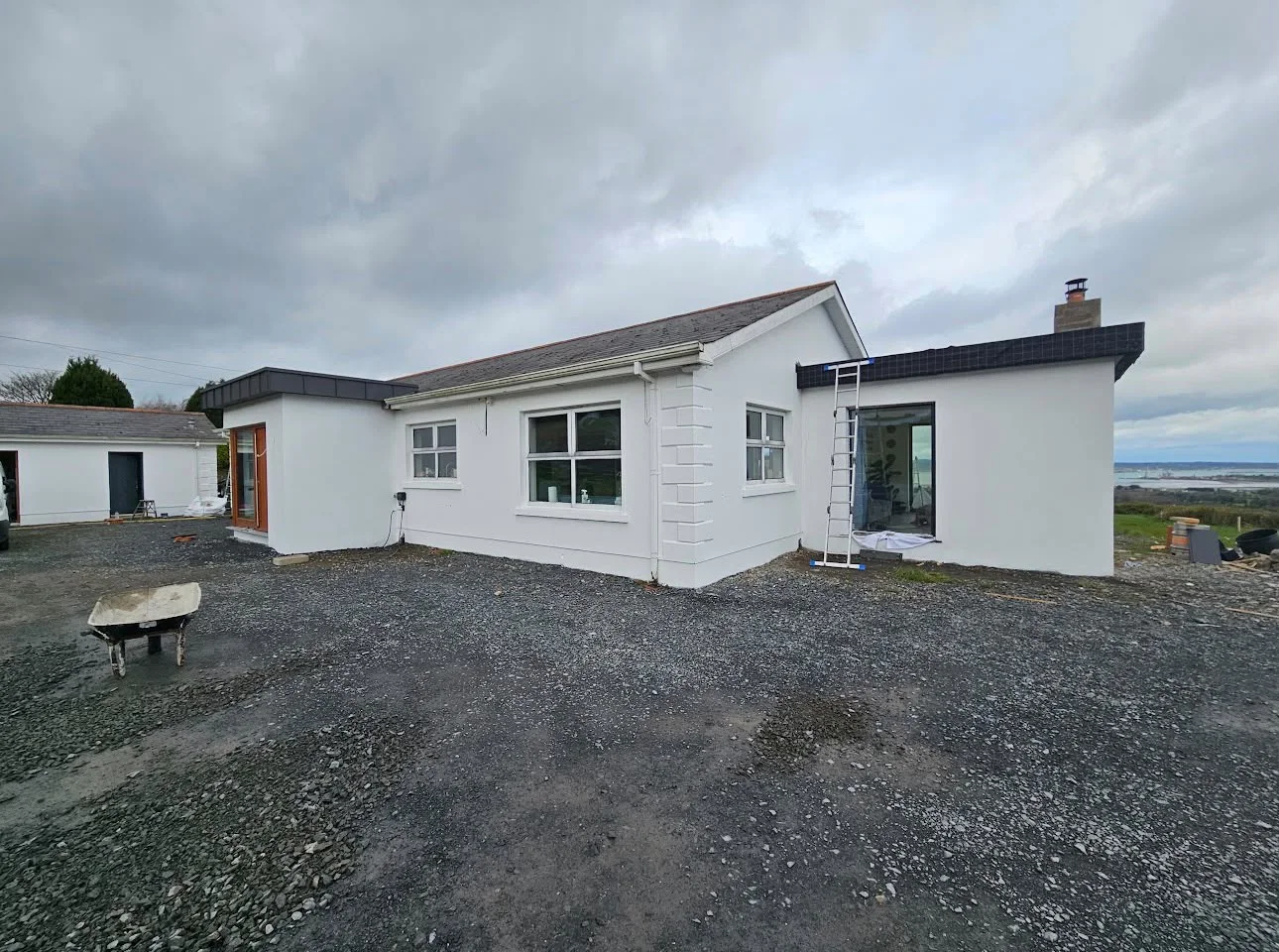
An elevation is one face of the building. Label photographs front, rear and each side, and note which faces are included. A front-only refresh differs from a complete exterior even when both are described as "paint the house". Include the gable end, extension and porch separately if their condition or access differs.
List details rather than assuming they come with the walls: plinths, reveals, sills, painted bands and any timber trim. Identify the material of each. A concrete sill and a timber sill can share a name while needing different preparation and coating. Fascias, gutters, uPVC and metalwork are not automatically included.
| Scope line | Information to supply | Why it changes the comparison |
|---|---|---|
| Elevations | Named faces, approximate width and height | Stops a front-only figure being compared with a full repaint |
| Texture | Smooth render, pebbledash or mixed areas | Changes coverage and application effort |
| Details | Plinth, reveals, sills and contrasting bands | Adds edges, products and colour boundaries |
| Separate structures | Porch, extension, garage or boundary wall | May need separate condition and access checks |
| Access | Narrow paths, roofs below walls, conservatory or overhead services | May change the safe equipment and work plan |
Approximate dimensions are useful, but do not climb to obtain them. Clear ground-level photos and a description are safer starting evidence. The estimator can decide what measurements and assessment are needed.
Texture, condition and preparation
Rough surfaces have recesses that are not represented by a simple length-times-height measurement. They can require more material and a different application approach from smooth render. Read the pebbledash and render guide before comparing a smooth-wall rate with a rough-dash quotation.
Condition matters just as much. Dirt on sound paint, widespread flaking and damaged render are different starting points. Ask what cleaning and preparation are allowed for, what defects must be repaired beforehand and who is responsible. A decorative quote should not conceal unresolved leaks or masonry repairs.
The Dulux Trade Weathershield Smooth Masonry technical sheet requires a sound, clean and dry surface. That requirement helps explain why preparation cannot be reduced to a token wash on every job. It does not establish that the same primer or cleaning method suits every elevation.
If defects are recurring, distinguish the assessment or repair from the repaint. A quotation can state a condition assumption, such as painting after a separately arranged repair has dried sufficiently. It should also say how a newly discovered problem will be discussed before extra work proceeds.
Height and access equipment
Two walls with the same area can have very different access. A clear level path is different from a narrow side passage, a sloping garden or a wall above a conservatory. Nearby services, fragile roofs and public access can also affect the plan. Do not assume that reaching every surface from a ladder is appropriate.
The HSA work-at-height guidance emphasises planned work and equipment appropriate to the risk. For a homeowner comparing quotations, the practical question is whether the necessary access arrangement is included, separately allowed for or still awaiting assessment. This is not a request to choose equipment yourself.
Keep equipment, hire duration and access dependencies clear. If a neighbouring route is needed, permission and availability must be established. Do not assume that a fence can be moved, a roof walked on or a driveway kept occupied without discussion. These details can change the work even before a paint tin is opened.
Pricing selected elevations versus a complete exterior
A partial repaint can be reasonable where the selected face is sound enough to paint and the remaining elevations do not need immediate work. Compare the full cost of the selected scope, including access and preparation. It is not necessarily a simple fraction of the whole-house price because some set-up work still occurs.
Also consider the visible join. An existing colour can fade or look different beside new paint. A touch-up in the middle of an elevation may be more noticeable than repainting to a natural corner or architectural boundary. The right decision depends on condition and appearance, not a rule that every wall must always be painted together.
Hypothetical example: the front elevation looks tired, the rear is sound and a side wall has recurring damp patches. A useful comparison prices the sound front separately, records the rear as excluded and holds the damp side pending investigation. Calling this a whole-house repaint would hide three different decisions.
If the plan includes a new colour, use the exterior colour planning guide to test it beside the retained surfaces. A sample helps reveal whether an unpainted elevation will look intentionally retained or simply unfinished.
Dated Irish benchmarks and written quote scope
The Onlinetradesmen guide dated February 2025 provides broad national exterior categories and identifies labour-only estimates. It is background reading, not a current Dundalk quotation. Its house-size bands do not resolve your texture, access and repair needs.
Local-looking online tables can also be modelled from national estimates rather than completed local jobs. Check how the figure was produced before treating the place name as evidence. This guide has no verified property-specific price example from this business, so it does not invent one.
- Use the same elevation and detail list for each enquiry.
- Ask whether paint, sundries, equipment and applicable VAT are included.
- State the named system once selected, including required primers.
- Record repairs, exclusions and access assumptions.
- Separate garden walls and fences from the house exterior.
- Ask how weather and additional defects affect the proposed arrangements.
For timber boundaries, the fence painting cost guide uses length, height, sides and rails rather than house elevations. Keeping those scopes distinct makes a combined enquiry clearer.
Practical questions
Is floor area enough to estimate an exterior repaint?
It is background information, not the paintable scope. Extensions, gables, height, texture and included details can differ between homes with similar floor areas. Send elevation photographs and an item list so the estimate can address what is actually outside rather than extrapolating from the interior size.
Does a cheaper quote mean less preparation?
Not automatically. It may reflect a different scope, product, access allowance or other quotation condition. Compare the written inclusions before drawing conclusions. Ask specifically about retained coating, loose areas, repairs and equipment so the difference can be understood without assuming the reason from the total alone.
Can the house and fence be priced together?
They can be part of one enquiry, but keep separate measured scopes. House elevations, masonry details and timber fence faces have different materials and preparation needs. A combined total should still make clear what each part includes, particularly where repairs or neighbouring access remain unresolved.
Exterior painting: discuss your surfaces and scope. Contact the team with your area and photographs.